The Future of Business Education Is Simulation Based
Discover why simulations are essential in modern business education, helping students build real world decision making, strategic thinking and practical skills.
Author -Bhanvi Sharma
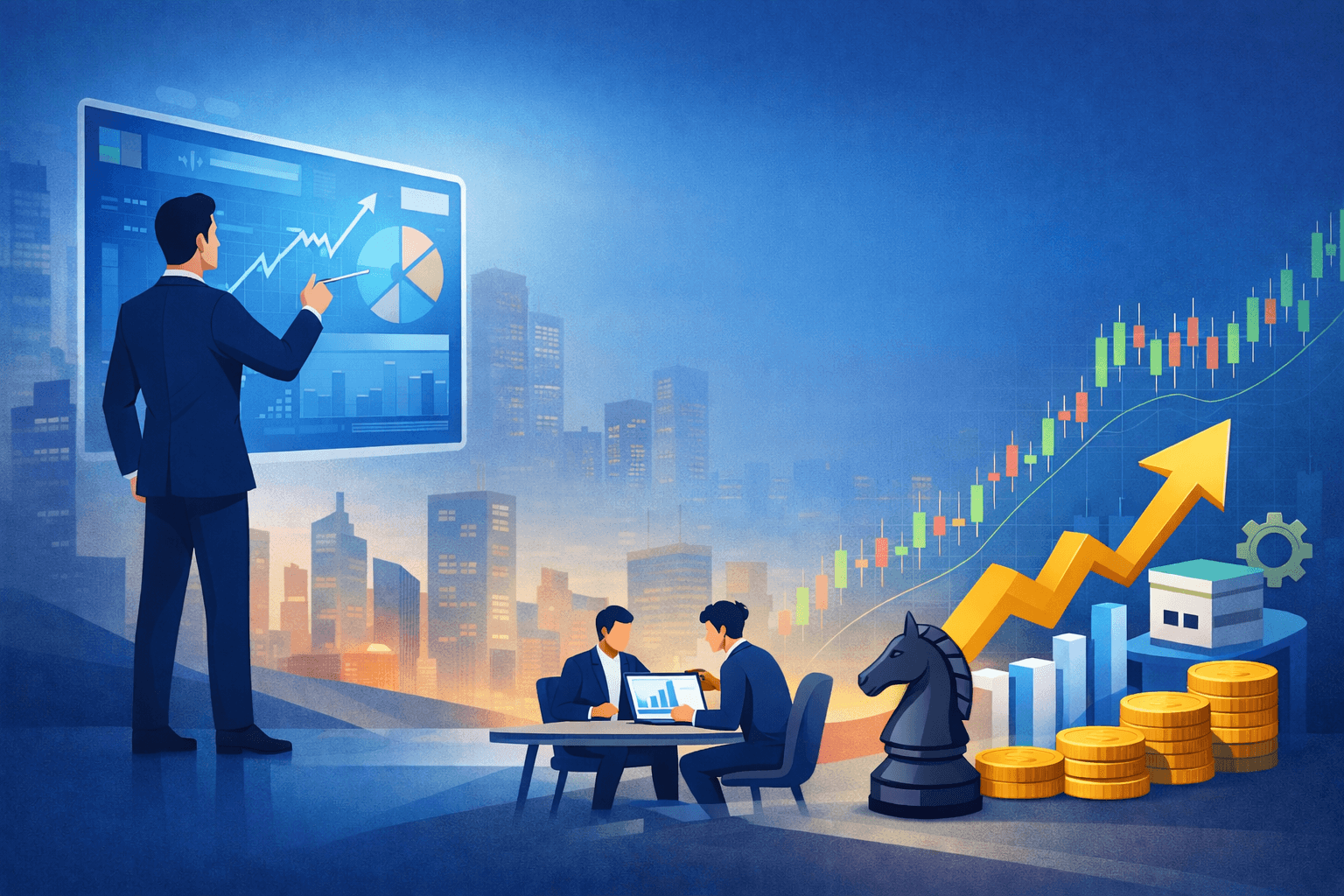
Business education is changing rapidly. Employers no longer evaluate candidates only on degrees or theoretical knowledge. They look for people who can think under pressure, connect decisions across functions and understand consequences in real time. This is exactly where simulations have become indispensable.
Simulations bridge the growing gap between classroom learning and Real world business complexity. Instead of learning about decision making, students and professionals practice decision making in environments that behave like real markets, companies and financial systems.
Learning has shifted from passive to experiential
Traditional learning methods relay heavily on lectures and text books. While these approaches explain concepts well, they often fail to prepare learners for uncertainty, incomplete information and dynamic change. Simulations reverse this model. Learners are placed inside evolving scenarios where every choice has consequences. Market conditions often change. Resources are constrained. Poor decisions compound overtime. This experiential format forces participants to actively engage with strategy instead of passively consuming information. As a result, learning becomes deeper, faster and more durable.
Simulations teach decision making and not just concepts
In real business environments success depends on how well decisions are made. Not how much theory is memorized!
Simulation expose learners to the same pressure points faced by managers and leaders:
1. Trade offs between growth and profitability
2. Short term performance versus long term sustainability
3. Risk management under uncertainty
4. Alignment between strategy, execution and outcomes.
Because simulation operate in cycles, participants experience how early decisions influence future results. Teaching a level of accountability that traditional assignments cannot replicate.
A safe environment to make mistakes
One of the most powerful benefits of simulations is that they allow failure without real world damage. Learners can experiment, take calculated risks and even make poor decisions. Then later analyze what went wrong! This process helps build confidence and judgement. Instead of fearing mistakes, participants learn how to identify weak assumptions, course correct strategies and improve decision quality overtime. These lessons are more impact full then hypothetical discussion.
Understanding how business function are interconnected
Businesses do not operate in silos. Marketing decisions effect finance. Financial constraints impact operations. Strategic choices influence the brand perception and the long term value. Simulations always mirror this interconnected reality. Participants quickly realize that optimizing one area at the expense of other areas often leads to failure. This helps learners develop this skill called systems thinking. A skill which is critical for leadership roles, but is rarely taught effectively through conventional methods.
Higher engagement and better retention
Engagement is one of the biggest challenges in today ‘s education. Simulations naturally solve this problem by making learners participate. Because outcomes are driven by their own decisions, participants stay invested. They track performance, reflect on the results and continuously adapt their strategies. This level of involvement always leads to higher knowledge retention and stronger conceptual understanding compared to passive learning formats.
Preparing learners for real world complexity
Modern workplaces demand professionals who can navigate ambiguity, respond to change and also think strategically. Simulations prepare learners for this complexity by replicating the real decision environments rather than simplified academy models.
Graduates who have experienced simulations enter the work force with:
1. Practical decision making experience
2. Better risk awareness
3. Stronger analytical and strategic thinking
4. A clear understanding of business dynamics
This makes simulation-based learning critical differentiator in business education.
Why simulations are the future of Business learning
As industries evolve way faster and job roles become more complex. Education must keep pace. Simulations offer a scalable, realistic and effective way to prepare learners for Real world challenges and not just exams. That's why institutions like “Taxila Business School” have integrated simulations as a Core part of their learning ecosystem. They don't just teach concepts, they develop decision ready professionals.
Conclusion
Simulation are no longer an enhancement to education, they are becoming a necessity. By transforming theory into experience, these simulations create learners who understand consequences strategical thinking and perform confidently in Real world environments. For anyone serious about mastering business, strategy or finance, simulation based learning is no longer optional, its essential.